- San Polo
- San Marco
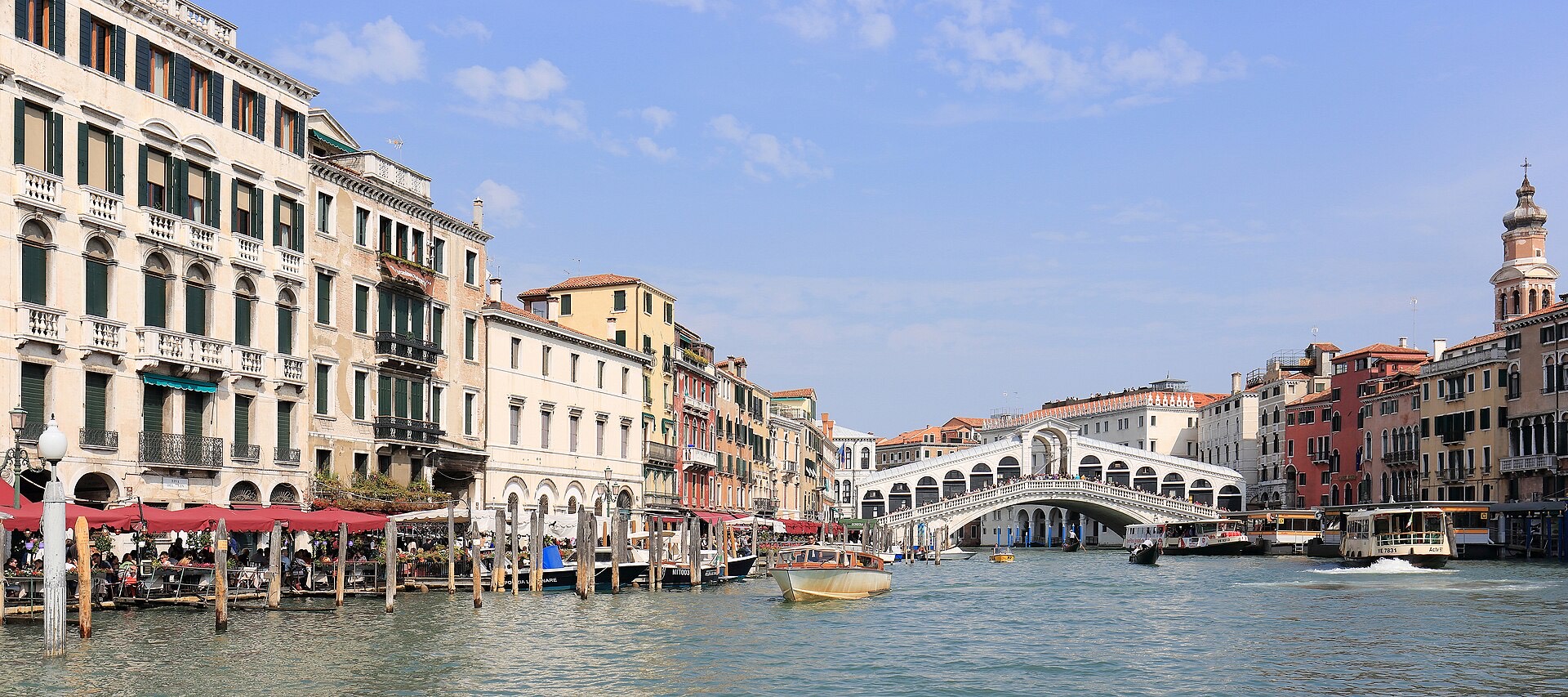
Rialto is the oldest market quarter and the first place the Grand Canal was bridged in stone. The name comes from Rivo Alto, high bank. The city grew here because the ground was slightly less wet than the rest of the archipelago.
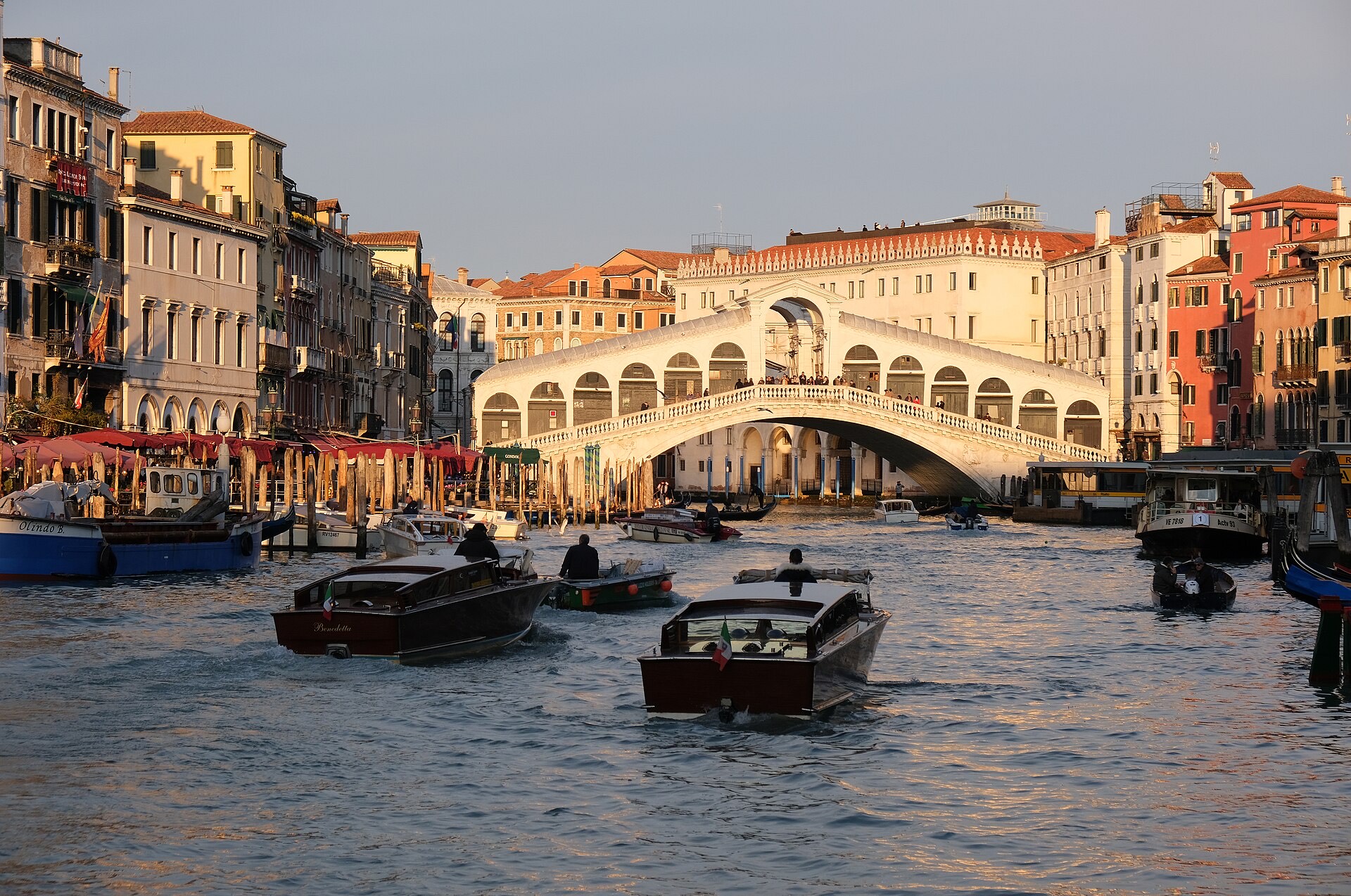
The bridge
Antonio da Ponte won the commission in the 1580s after earlier wooden bridges failed. The single stone arch carries two sloping ramps and a row of shops along the crown. For centuries it was the only fixed crossing of the Grand Canal. The Accademia, Scalzi and Constitution bridges came much later. That is why every walking route still funnels through Rialto whether you planned it or not.
Stand at the top if you must. The better view of the bend is from the water, or from the fondamente a little downstream.
The pescaria
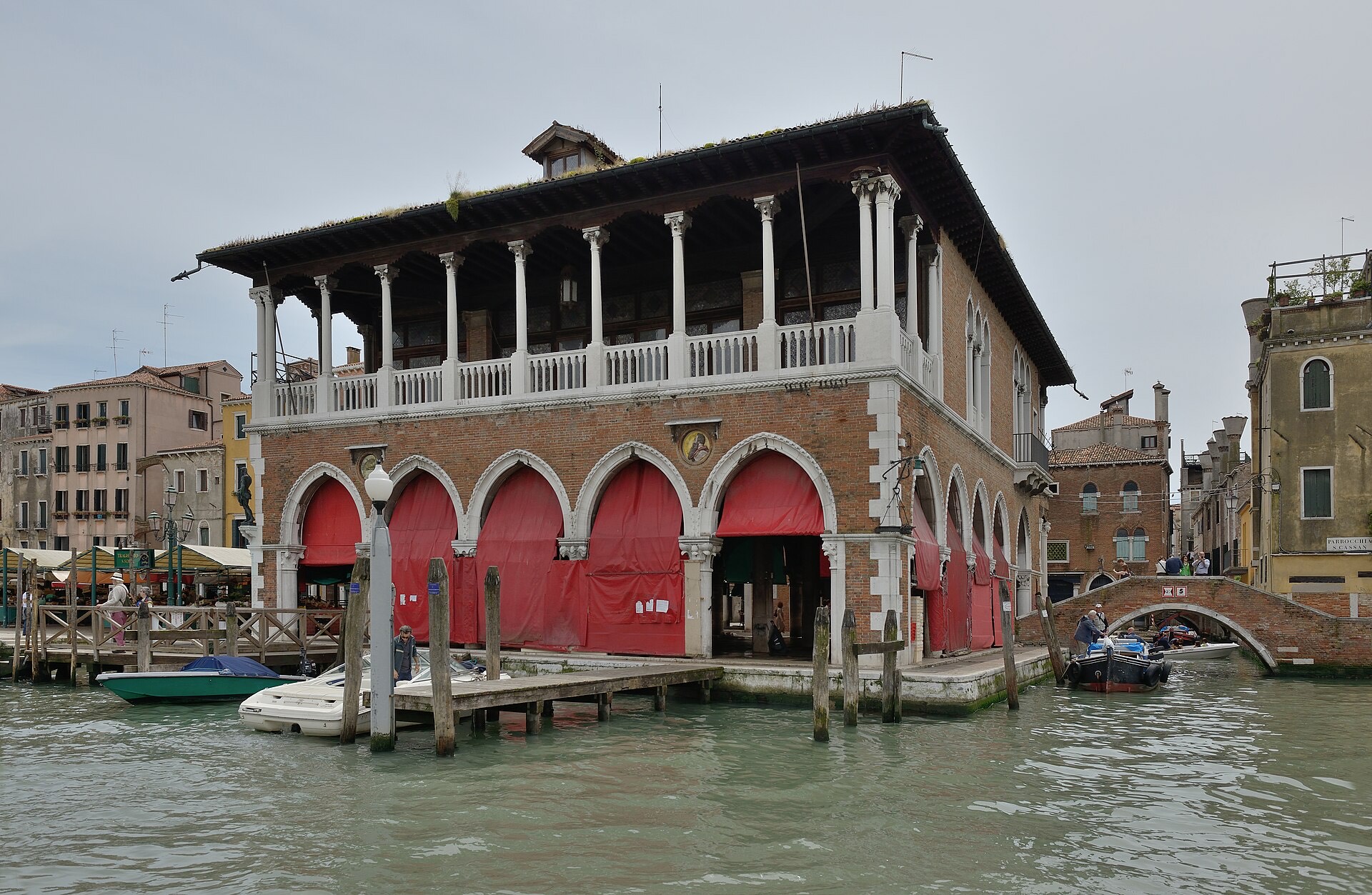
The fish market hall went up in 1907 to designs by Domenico Rupolo and Cesare Laurenti, a deliberate neo-Gothic shed on the site of older stalls. In the morning it still smells like a working market. By early afternoon the slabs are hosed down and the campo goes quiet. Next to it the erberia sells fruit and vegetables. If you want Rialto as a market rather than a viewpoint, arrive before the cruise groups find the bridge.
The canal bend
This is the tightest turn of the Grand Canal. Boat traffic stacks here: vaporetti, taxis, delivery barges, the occasional gondola. The palaces on the San Marco side include the Fondaco dei Tedeschi, once the German merchants' warehouse, now a department store with a roof terrace that needs a free booking in busy months. We do not handle those bookings.
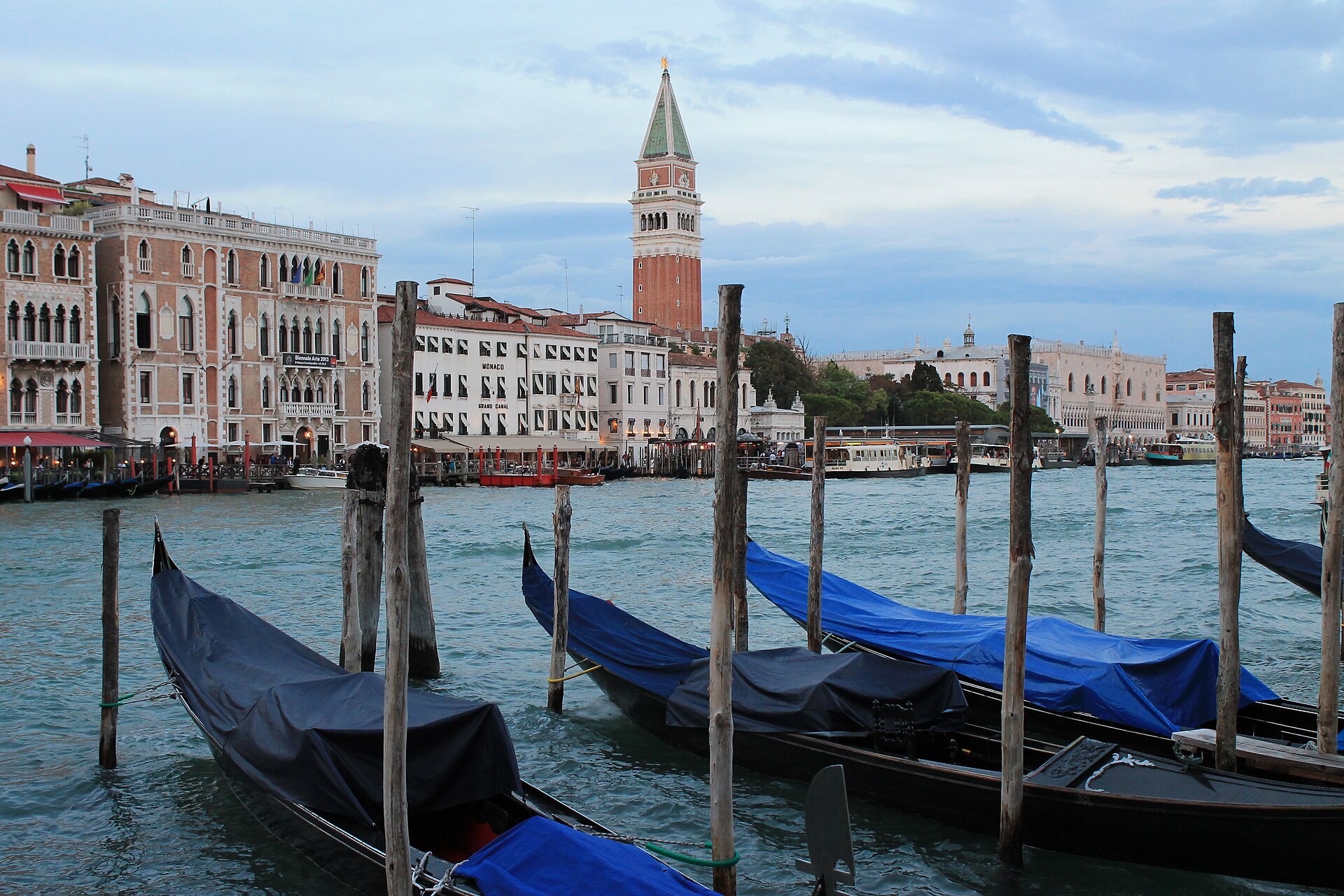
A traghetto crossing operates near here, a two-man gondola that shuttles foot passengers across the canal. You stand. It is the older way to cross, and it still beats walking to the next bridge when your feet have had enough steps.